Last Updated on August 3, 2026 by Admin
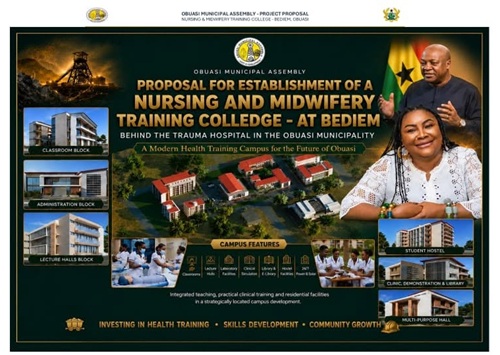
The Obuasi Municipal Assembly has presented its proposed GH¢62.42 million Nursing and Midwifery Training College project at Bediem to a monitoring team from the Office of the Administrator of Stool Lands (OASL), as part of oversight on the utilisation of stool lands revenue and mineral royalties allocated to the Assembly.
The engagement formed part of a monitoring exercise to assess how statutory funds, particularly mineral royalties, are being applied to development projects within the municipality.
The proposed institution, to be sited behind the ongoing Trauma Hospital at Bediem, is expected to become a major centre for health training and a key response to the growing demand for healthcare professionals in the Obuasi Municipality and surrounding districts.
Monitoring Team Engagement
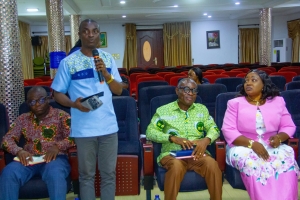
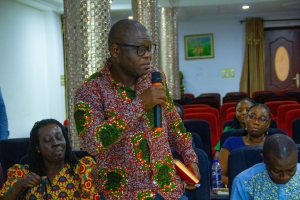
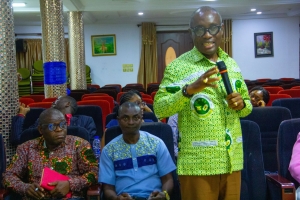
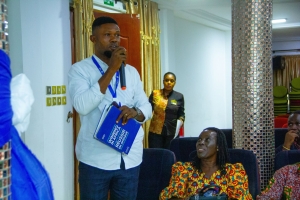
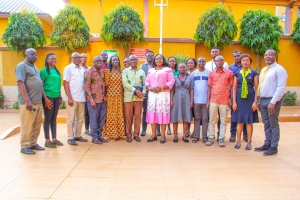
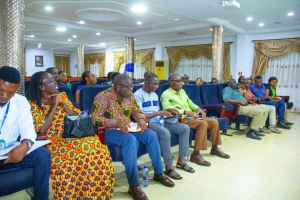
The presentation was made during a stakeholder meeting with a high-powered delegation from the Stool Lands Secretariat, led by the Ashanti Regional Stool Lands Officer, Nana Franklin Oppong-Obiri Isaac Oppong.
Other members of the delegation included Larry, Deputy Director (Ashanti), Mrs. Gladys Asantewaa Klutse, Director of Estates, Cecilia Arko, Officer, Gloria Boakye Yiadom, Municipal Director of Stool Lands (Obuasi), and Dickson Kwame Agbogah, Head of Legal.
The team engaged the Assembly on ongoing and proposed projects financed through mineral royalties and stool lands revenue, with emphasis on accountability, transparency, and development impact.
Royalty-Funded Development Projects
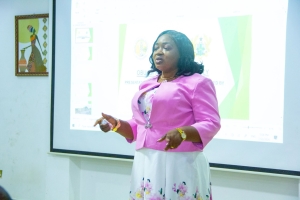
Speaking on behalf of the Municipal Chief Executive, the Municipal Coordinating Director, Madam Joyce Akosua Angmorteh, explained that the Nursing and Midwifery Training College would be financed through the municipality’s share of the Stool Lands Fund and mineral royalties.
She further indicated that the administration block of the proposed college would be specifically funded through mineral royalty allocations, underscoring the Assembly’s commitment to channeling statutory resources into long-term development infrastructure.
Madam Angmorteh noted that mineral royalties have already been used to support key projects in the municipality, including the construction of the New Nsuta CHPS Compound, which has improved access to primary healthcare services.
She assured the monitoring team that the Assembly remains committed to ensuring that royalty funds are used judiciously to deliver tangible benefits to residents.
Technical Presentation of Project Design
The detailed technical presentation of the project was delivered by the Municipal Works Engineer, Mr. David Agyei, who outlined the scope, design concept, and estimated cost of the facility.
He explained that the project has been carefully designed to meet modern standards for health training institutions, with emphasis on durability, functionality, and efficient use of space.
Integrated Health Training Facility
The proposed Nursing and Midwifery Training College has been designed as an integrated campus combining academic, clinical, residential, and administrative facilities.
The project will include lecture theatres, classrooms, administrative offices, a clinic and library complex, a multi-purpose hall, student hostels, staff accommodation, and other essential infrastructure to support effective teaching and learning.
Municipal officials indicated that the integrated model is intended to create a conducive environment for professional training while positioning Obuasi as an emerging hub for health education in the Ashanti Region.
Addressing Healthcare Workforce Gaps
The Assembly explained that the project is a strategic response to the municipality’s growing demand for healthcare professionals, driven by population growth, urbanisation, and the presence of large-scale mining operations.
Obuasi’s expanding health infrastructure—including the Trauma Hospital, the Obuasi Government Hospital, the Kunka Health Centre, and several CHPS compounds—has increased the need for qualified nurses and midwives.
However, the absence of a Nursing and Midwifery Training College in the municipality has meant that many prospective students must seek training outside Obuasi.
Officials believe the new institution will help bridge this gap by providing local access to professional training while strengthening staffing levels in health facilities across the municipality and neighbouring districts.
Socio-Economic Impact
Beyond healthcare training, the project is expected to generate significant socio-economic benefits.
It is anticipated to create jobs during construction and operation, stimulate local businesses, and increase demand for housing and services.
The college is also expected to attract students, lecturers, and health professionals from across the country, thereby boosting economic activity and reinforcing Obuasi’s status as a centre for education and healthcare delivery.
If implemented, the GH¢62.42 million project will become one of the municipality’s most significant education and health investments, reinforcing the Assembly’s commitment to using mineral royalties and stool lands revenue for sustainable development.
The proposed institution is expected to play a key role in producing the next generation of nurses and midwives while advancing Obuasi’s vision of becoming a well-planned, resilient, and economically vibrant municipality.